

Hospital Video Wall Solutions: Streamlining Information in Critical Environments
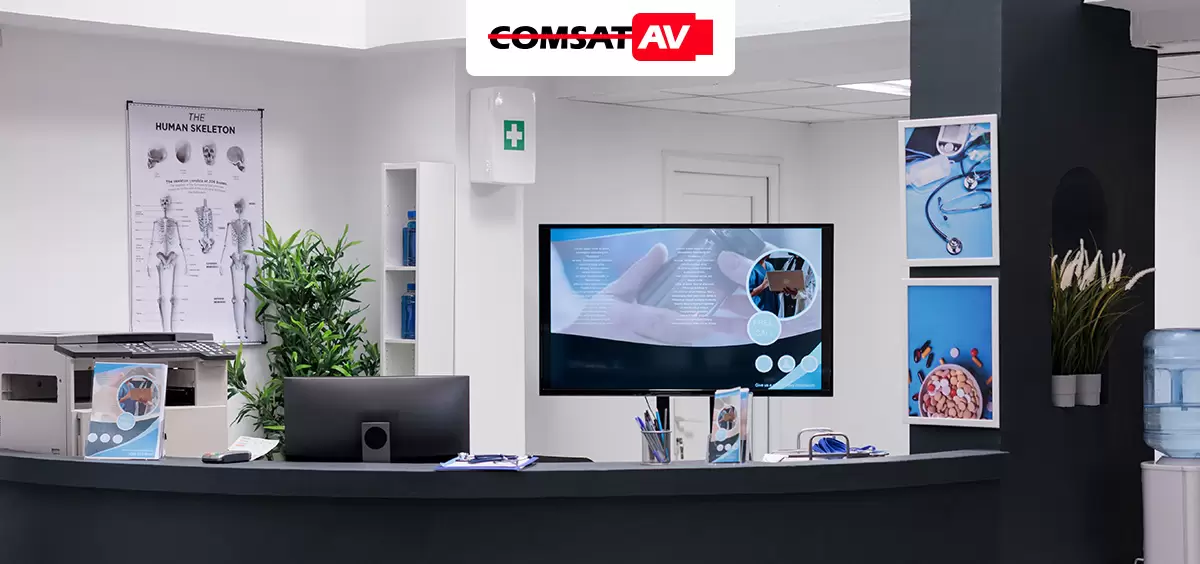
In today’s fast-paced healthcare world, every second counts. Hospitals and medical centers depend on real-time information to make life-saving decisions — from monitoring patients and coordinating emergency responses to managing facility operations.
To meet these demands, healthcare organizations are turning to video wall technology — a powerful tool for visualizing complex data, improving communication, and streamlining collaboration in critical environments.
Here’s how hospital video wall solutions are helping medical professionals see more, respond faster, and operate smarter.
1. Centralizing Information in Critical Care Environments
Modern hospitals rely on a vast array of data sources — patient monitoring systems, imaging devices, security feeds, and facility sensors. Video walls bring all of this information together into one centralized command view.
In nurse stations, emergency departments, and control rooms, video walls:
- Display real-time vitals and telemetry data.
- Combine security camera feeds for patient and staff safety.
- Show facility system statuses such as HVAC, power, or fire alarms.
- Enable instant access to dashboards and alerts.
This unified visual environment gives staff immediate insight into operations, enabling faster, better-informed decisions when they matter most.
2. Enhancing Communication Across Departments
Hospitals are complex ecosystems — and miscommunication can lead to costly errors. Video wall systems help bridge communication gaps between departments.
For example:
- Operating rooms can display live imaging or lab results from other areas.
- Emergency command centers can coordinate with ambulances and local responders.
- Administrative offices can share announcements, metrics, or training videos.
By integrating with the hospital’s network and AV infrastructure, video walls ensure that the right information reaches the right people instantly.
3. Supporting Emergency Response and Situational Awareness
During crises — like mass casualty events, natural disasters, or system outages — hospitals must respond with precision and speed.
Video walls play a crucial role in emergency operations centers (EOCs) by:
- Displaying incident maps, real-time video feeds, and resource tracking dashboards.
- Allowing multiple teams to view and act on the same data simultaneously.
- Providing visual situational awareness that enhances coordination among medical, security, and logistics teams.
In high-stress moments, video wall technology transforms information overload into clear, actionable intelligence.
4. Improving Training and Collaboration
In addition to daily operations, video walls are revolutionizing medical training and research environments.
In medical simulation labs, lecture halls, and conference spaces, large-format displays can:
- Broadcast live surgeries or procedures for teaching purposes.
- Share high-resolution diagnostic imagery for collaborative analysis.
- Enable multi-site conferences with video conferencing integration.
By connecting experts in real time, video walls foster collaborative medicine — improving learning outcomes and accelerating medical innovation.
5. Enhancing Patient and Visitor Experiences
Beyond critical care and operations, digital video walls are transforming the patient-facing side of healthcare facilities.
Hospitals and clinics use signage to:
- Display wayfinding maps and department directories.
- Provide wellness tips and hospital updates.
- Share recognition stories, staff highlights, and donor messages.
When strategically placed in lobbies, waiting rooms, and hallways, video walls help create a welcoming, informative, and calming environment for patients and families.
6. Ensuring Security, Compliance, and Reliability
In healthcare, uptime and compliance aren’t optional — they’re essential. Video wall systems designed for hospitals must meet strict operational and security standards.
Best practices include:
- Using HIPAA-compliant configurations for data privacy.
- Implementing redundant power and signal paths for 24/7 reliability.
- Integrating with building management systems (BMS) and security networks.
- Utilizing industrial-grade displays rated for continuous operation.
ComSat AV’s healthcare-grade AV solutions are engineered to meet the demands of mission-critical environments — where performance and reliability directly affect patient care.
7. The Future of Video Walls in Healthcare
Emerging trends are making hospital video wall systems even more intelligent and adaptable:
- AI-driven analytics that detect anomalies or patient distress.
- AV-over-IP infrastructure for flexible data routing and remote management.
- Touch-enabled control systems for instant display customization.
- Energy-efficient LED technology for sustainability and cost savings.
As hospitals continue to digitize operations, video walls are becoming the backbone of connected care — bridging medical technology, facility management, and patient communication in real time.
Why Partner with ComSat AV for Hospital Video Wall Solutions
At ComSat AV, we specialize in designing and integrating advanced AV systems for healthcare environments — with precision, security, and scalability in mind.
Our experts deliver:
- Custom control room and operations center design.
- Healthcare-compliant video wall integration.
- Turnkey installation and ongoing technical support.
- Training and remote monitoring to ensure reliability.
Whether your goal is improving operational visibility or enhancing patient experiences, ComSat AV provides technology solutions built for healthcare’s most critical moments.
💡 Ready to Transform Your Hospital with Smart Video Wall Technology?
Empower your facility with real-time data visualization and communication tools that enhance decision-making and patient care.
👉 Schedule a free consultation today with ComSat AV to discuss a customized hospital video wall solution for your facility.