


Designing Command & Control Centers with Advanced Video Wall Technology
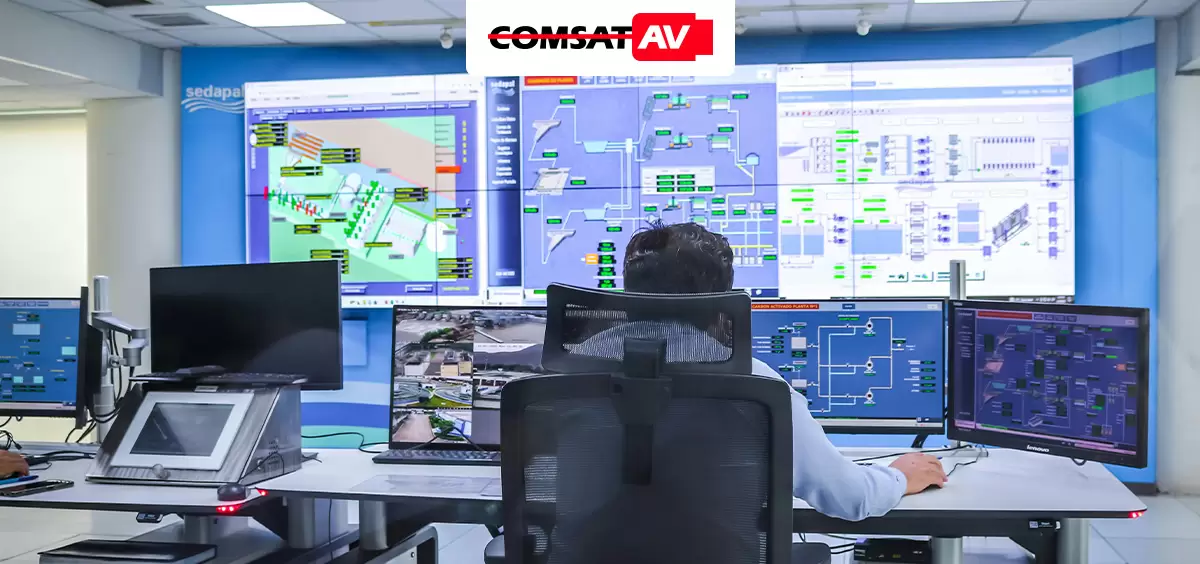
In mission-critical environments, real-time visibility and coordination are everything. Whether monitoring security operations, transportation networks, utilities, or emergency response systems, the command and control center serves as the operational heartbeat of an organization.
At the core of these centers lies a key element: the video wall — a large-scale, high-resolution display system designed to visualize complex data, live feeds, and analytics in one centralized view.
Here’s how advanced video wall technology is redefining how control rooms are designed, managed, and optimized for performance.
1. The Role of Video Walls in Command & Control Centers
A video wall does more than just display information — it enables situational awareness, decision-making, and collaboration in high-pressure scenarios.
Key applications include:
- Security operations centers (SOCs): Real-time camera feeds and threat monitoring.
- Traffic management centers (TMCs): Road network and congestion visualization.
- Emergency operations centers (EOCs): Disaster response coordination and resource tracking.
- Utilities and energy control rooms: Monitoring grids, pipelines, and system alerts.
By consolidating multiple data sources onto a single, scalable display, teams can quickly interpret and act on information — improving speed, accuracy, and coordination.
2. Choosing the Right Video Wall Technology
Selecting the right video wall technology depends on operational needs, viewing conditions, and system integration requirements.
Main types of video wall systems include:
- 🟢 Direct-View LED:
Offers seamless, ultra-bright imagery with no bezels — ideal for large, 24/7 control environments. Delivers exceptional color accuracy and long lifespan. - 🔵 LCD Panels:
Provide high-resolution visuals with minimal bezels at a lower cost, suitable for mid-sized control rooms. - ⚪ Projection Cubes:
Used in legacy installations and large monitoring environments where uniform brightness is key.
For most modern command centers, LED video walls are now preferred for their durability, clarity, and energy efficiency, especially when combined with redundant power supplies and real-time monitoring tools.
3. Designing for Functionality and Operator Comfort
A command center must balance technology, ergonomics, and human factors. A well-designed space helps operators maintain focus and efficiency during long shifts.
Key design principles include:
- Optimized sightlines: Ensure every operator has an unobstructed view of critical visuals.
- Ambient lighting control: Use dimmable, indirect lighting to reduce glare and eye strain.
- Acoustic treatment: Control background noise to enhance communication clarity.
- Modular workstations: Allow flexibility for various monitoring and response tasks.
Proper layout planning ensures your video wall system becomes an integrated part of an operator-centric workspace — not a distraction.
4. Integrating Multiple Data Sources
A true command center brings together diverse feeds into one unified view. Advanced AV-over-IP systems and content management processors allow operators to switch, segment, and scale data seamlessly.
Integration examples include:
- Live video streams from surveillance and drone cameras.
- IoT sensor data from field devices.
- SCADA systems for infrastructure monitoring.
- GIS mapping and traffic visualization tools.
- Collaboration platforms for interdepartmental communication.
By integrating data sources, teams gain a single source of truth for real-time decision-making.
5. Intelligent Control and Automation
Today’s control centers are adopting intelligent automation systems that simplify complex workflows.
Through centralized control software, operators can:
- Switch layouts or data sources instantly.
- Trigger preset display configurations during emergencies.
- Manage lighting, audio, and temperature from one console.
- Automate alerts based on predefined thresholds.
These features reduce human error and allow staff to focus on critical analysis instead of manual adjustments.
6. Reliability, Redundancy, and 24/7 Operation
Control rooms operate continuously — meaning uptime is non-negotiable.
To ensure reliability:
- Choose industrial-grade components rated for 24/7 duty cycles.
- Incorporate redundant power and signal paths to prevent downtime.
- Use real-time system monitoring for proactive maintenance.
- Schedule periodic calibration to maintain brightness and color uniformity.
A professionally designed system ensures consistent performance under pressure — exactly what mission-critical operations demand.
7. Scalable Architecture for Future Growth
Technology evolves rapidly, and command centers must adapt.
Future-proofing involves designing an AV infrastructure that’s modular and expandable.
Look for:
- AV-over-IP platforms for scalable routing of video and data.
- Upgradable LED panels for expanding display size or resolution.
- Cloud-based monitoring and analytics for system optimization.
Scalability ensures your investment continues to deliver value as your organization grows or your monitoring requirements evolve.
8. The Importance of Professional Design and Integration
A high-performance command center is more than just hardware — it’s a carefully engineered ecosystem. Partnering with an experienced AV integrator like ComSat AV ensures:
- Comprehensive needs assessment and environment analysis.
- Custom video wall design based on room geometry and viewing distances.
- Seamless integration with IT and security systems.
- Training and support for ongoing system management.
With expert design and installation, your control center becomes a strategic asset that empowers teams to act faster and more effectively.
Why Advanced Video Walls Are Essential for Modern Command Centers
Advanced video wall technology transforms data overload into actionable insight. By delivering crystal-clear visualization and real-time collaboration, it turns complex systems into manageable workflows.
In environments where every second matters — clarity, scalability, and reliability aren’t optional; they’re mission-critical.
💡 Ready to Design a Smarter, More Capable Command Center?
At ComSat AV, we specialize in building custom command and control center solutions featuring next-generation video wall technology. From concept and design to installation and ongoing support, we deliver systems engineered for performance, precision, and reliability.
👉 Schedule a free consultation today to explore how ComSat AV can help you design a mission-ready control center tailored to your organization’s needs.